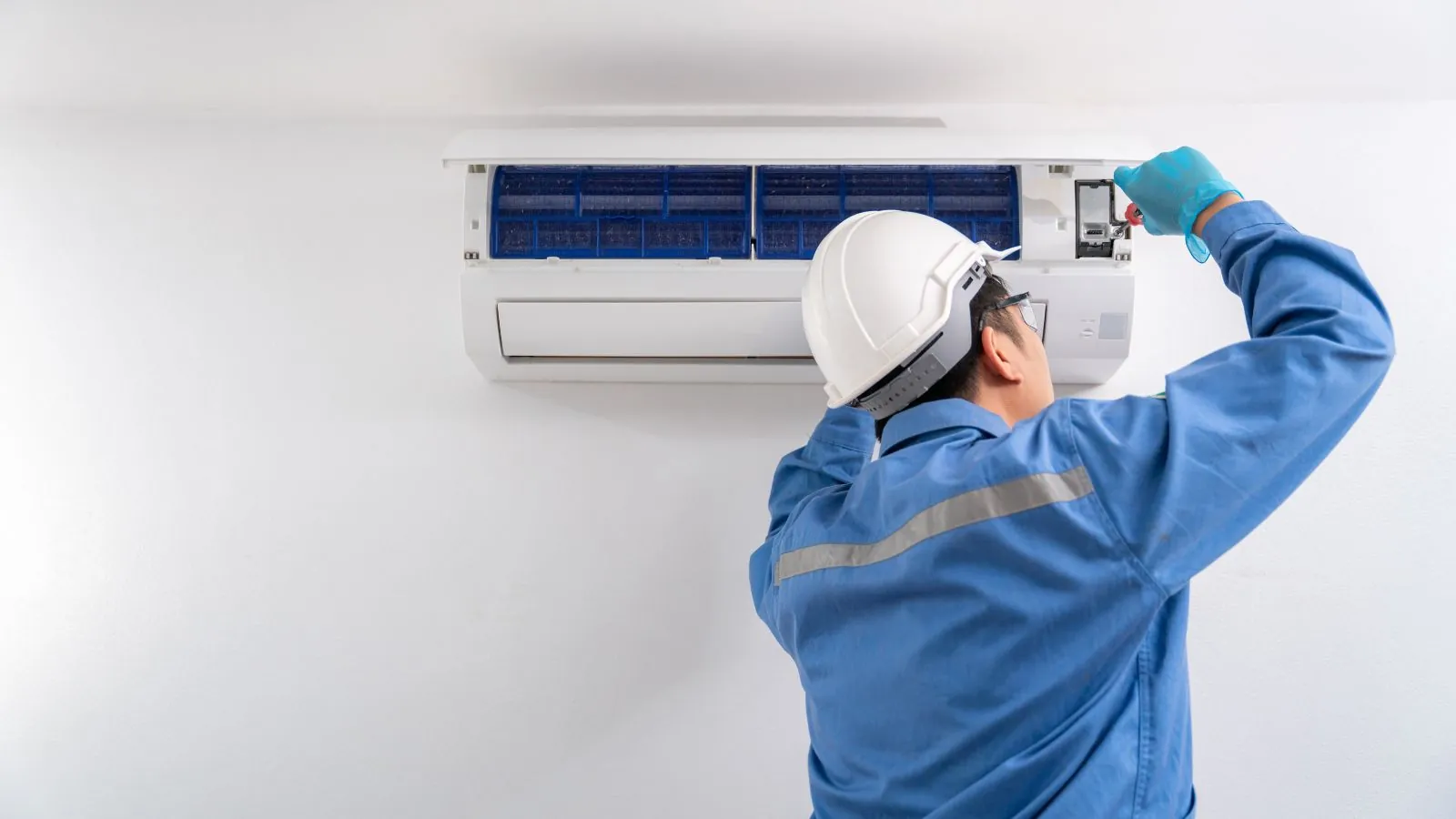
An AC leak is often a slow problem, and the line is open 24/7 when it turns into a soaked ceiling or floor. Turn off the system, put towels or a bucket under the drip and leave the cleanup to the crew if water reached a ceiling or wall.
AC leak water damage in Westland, MI is usually condensate. A central air conditioner pulls moisture from the air and sends it through a drain line. When that line clogs or the drain pan cracks, the water has nowhere to go but out of the unit and into the floor, ceiling or wall below.
Where AC water ends up
An air handler in the attic leaks into the ceiling below. A unit in a closet leaks into the floor and subfloor. A window unit can drip onto a sill or down an exterior wall. Many of these leaks are small for weeks and then show up as a brown stain, which is why a stain after a hot spell deserves a check.
| Equipment location | What gets wet | First check |
|---|---|---|
| Attic air handler | Ceiling drywall and insulation | Drain pan and condensate line |
| Closet or utility room | Subfloor and baseboard | Pan and drain connection |
| Basement furnace and coil | Concrete, wall bottoms | Drain line and floor drain |
| Window or wall unit | Sill and exterior wall interior | Tilt and drain hole |
Why damp insulation matters
A condensate leak is clean water, but it often keeps coming back through summer. Insulation that stays damp holds water against drywall, so wet insulation is usually removed, and the cavity is dried before the ceiling is closed. A damp smell that comes back is a sign that moisture is still there.
What the crew does
- Moisture meters and thermal imaging map the wet area above and around the stain.
- Wet insulation and drywall are removed where they cannot dry.
- Dehumidifiers and air movers dry the cavity and the surrounding materials.
- The ceiling or wall is rebuilt after the readings are normal.
Who fixes the AC
An HVAC contractor clears the line, replaces the pan or repairs the unit. Westland lists mechanical work as a separate permit category, so ask the Building Division what applies. This line handles the water damage and works around the HVAC visit. See ceiling water damage repair when the stain is above you, and structural drying for the equipment that finishes the job.
Michigan summers are humid enough to keep condensate lines busy. If a unit is running hard and the line is slow, clearing it before the first hot week is a maintenance task rather than a restoration job.
Preventing the next AC leak
Most condensate leaks come from a line that clogs with slime and dust. An HVAC contractor can clear the line and check the drain pan, and some systems have a float switch that shuts the unit off when the pan fills. Changing the filter on schedule helps air flow, and checking the pan at the start of the cooling season catches many problems early.
A stain that returns after the first hot spell is a sign that the line is clogged again or that the pan is cracked. Drying the ceiling without fixing the cause only resets the clock, so the HVAC repair and the drying go together.
Industry practice for drying after a leak follows the ANSI/IICRC S500 standard for professional water damage restoration, which is why readings are taken before and after rather than judged by touch.
AC leaking into the house?
Turn the system off and call the line.
What shapes the cost of ac leak water damage
- How long the leak ran before it was found.
- Whether it reached a ceiling, a floor or both.
- How much insulation was wet.
- Drying days and equipment.
- The finish work after drying.
A slow condensate leak can fall under maintenance exclusions, while a sudden failure may be covered. Ask your insurer before you decide, and photograph the stain and the unit.
Want your real number? Call (833) 521-1033 and the scope and price are explained before work starts.
Common questions
Why is water coming from my AC ceiling vent?
Often a clogged condensate line or a cracked pan. Turn the system off and call an HVAC contractor, then call the line if the ceiling is wet.
Is the water from an AC unit clean?
It starts as condensation, but it picks up dust and slime in the pan. Treat the area as wet and dry it quickly.
Will drying stop it from coming back?
Drying removes the moisture in the materials. The HVAC repair stops the source, and both are needed.