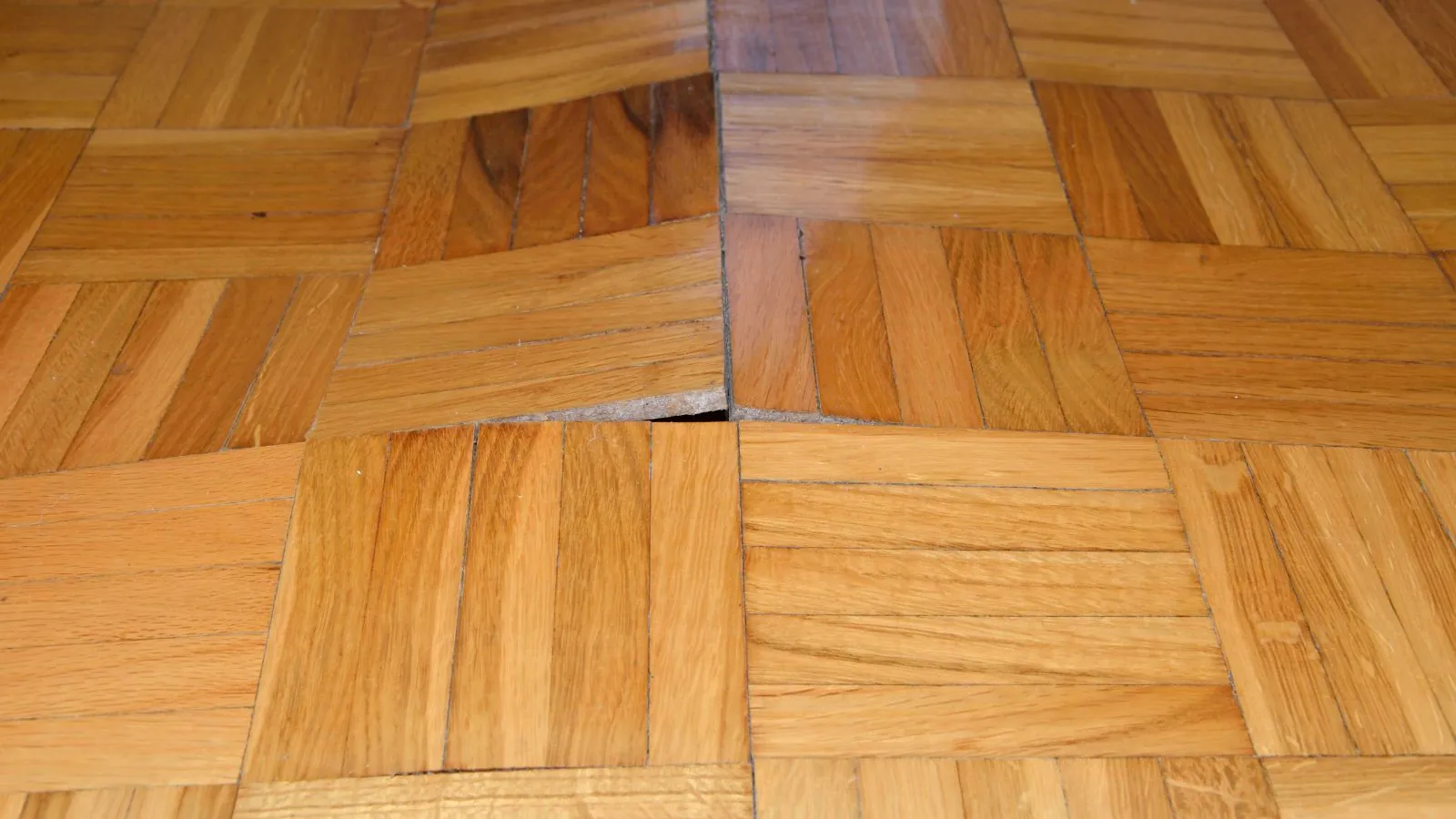
Wet hardwood changes fast, and the line is open 24/7. Wipe up standing water, lift rugs and furniture and do not use heat to speed drying, because heat can crack the boards.
Hardwood floor water damage repair in Westland, MI starts with finding out how wet the boards and the subfloor are. Wood takes on water and swells, and when it dries unevenly it cups, crowns or buckles.
What cupping and buckling mean
| Sign | What it means | Possible outcome |
|---|---|---|
| Cupping (edges higher than the center) | Moisture from below or the surface | Often flattens after drying |
| Crowning (center higher) | Boards dried too fast or sanded while wet | May need sanding after drying |
| Buckling (boards lift off the subfloor) | Heavy water, long exposure | Often replaced in the affected area |
| Black or gray staining | Long exposure to moisture | Often replaced |
Drying wood floors
Specialized mats and air movers pull water from the boards and subfloor, and a moisture meter checks the wood each day. The goal is to get the boards back to a normal moisture level before any refinishing. Sanding too soon locks in the cupped shape.
- Water is extracted first, see water extraction.
- Drying runs for days with daily readings of the boards and subfloor.
- Boards that stay cupped or stained are replaced in the affected area.
- The floor is sanded and refinished after it is dry.
Water from below
A leak in the crawl space, a slab leak or a wet basement can wet the underside of the floor while the top looks fine. A cupped floor with no spill above often means moisture from below, so the source has to be found. See crawl space water damage and slab leak water damage.
Westland homes and wood floors
Many Westland homes have wood floors under carpet. Norwayne's houses, for example, are described in the National Register listing as Bungalow, Craftsman and Moderne styles, and many such homes have original floors. Check under any carpet that got wet, because wood under it may need drying too.
The structural drying page explains the equipment. Carpet over wood is covered at carpet water damage restoration.
Solid, engineered and laminate floors
| Floor type | How it reacts to water | Usual path |
|---|---|---|
| Solid hardwood | Swells, cups and can buckle | Dry slowly, sand and refinish if it flattens |
| Engineered wood | Layers can separate and edges lift | Often replaced in the wet area |
| Laminate | Core swells at the seams and stays swollen | Usually replaced in the affected area |
The type of floor decides what is realistic. Solid hardwood has the best chance of recovering because it can be sanded. Engineered and laminate products are thinner and made of layers, so once the core swells it rarely goes back to its original shape.
What not to do
- Do not use a heat gun, a space heater or a hair dryer on the boards.
- Do not cover the floor with plastic, which traps moisture.
- Do not nail down or sand a floor that still reads wet.
- Do not wait for the boards to flatten on their own before calling.
When refinishing makes sense
A floor is ready for sanding only after the boards and the subfloor read at a normal moisture level for several days in a row. The crew shares the readings so you can see it for yourself. Refinishing early can seal in moisture and lead to a floor that cups again once the finish is on.
The ANSI/IICRC S500 standard calls for drying to a documented goal, and for wood floors that goal is a moisture reading near the reading of unaffected boards in the same room.
Wood floor getting wet?
Wipe up water, skip the heat and call the line.
What shapes the cost of hardwood floor water damage
- The area of wet flooring.
- The type of wood and the finish.
- How long the wood stayed wet.
- Drying days and equipment.
- Sanding, refinishing or replacement of boards.
A sudden leak that wet a wood floor may be covered, while long-term moisture may not. Photograph the floor before any work and keep the moisture readings.
Want your real number? Call (833) 521-1033 and the scope and price are explained before work starts.
Common questions
Can cupped hardwood be saved?
Often, if it dries before the boards crack or buckle. A moisture meter and a few days of drying show whether it will flatten.
Should I sand a cupped floor right away?
No. Sanding before the boards are dry can lock in the cupped shape. Dry first, then sand.
Why is my floor cupping when nothing spilled?
Moisture from below, such as a crawl space, a slab leak or a damp basement, is a common cause.