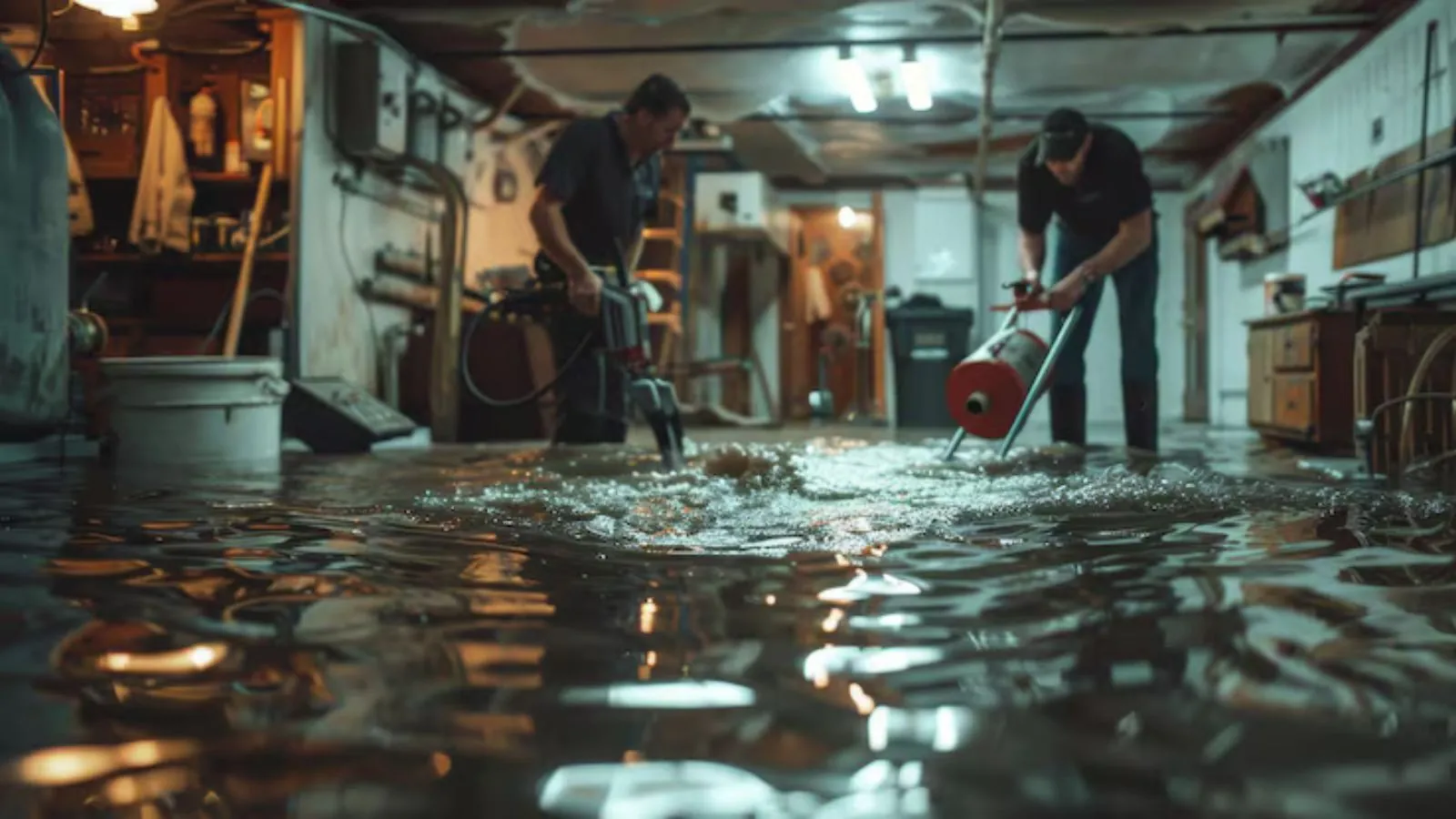
Standing water is an emergency, and the 24/7 line is open now. While you wait for a crew, stop the source if you can, shut off the main water valve, keep people and pets out of any water that may be dirty, and lift valuables off the floor.
Water extraction in Westland, MI means removing standing water with pumps, extraction units and wet vacuums before it soaks into drywall, pad and framing. It is the first step of any large water loss, and it comes before the drying that follows.
When standing water is an emergency
Water that is deeper than a shallow film on the floor is an emergency for two reasons. It keeps moving into materials that take days to dry, and it can hide electrical hazards. The Westland Fire Department flood guidance warns that six inches of moving water can knock a person down and says to stay away from electrical equipment while standing in water.
If the panel, a basement outlet or an appliance is in the water, stay out, call 911 or the utility for any electrical or gas risk and then call the restoration line. After hours is the same as daytime on this line, and the dispatcher will ask about the depth, the source and whether the water is still rising.
How extraction works
A crew starts by finding the source and the low point of the room, because water collects where the floor slopes. Submersible pumps handle depth, and truck or portable extraction units pull the water that sits in carpet, pad and cracks in the floor once the depth is gone.
- Submersible pumps clear standing water that is several inches deep.
- Portable extraction units remove water from carpet and pad without moving the floor.
- Wet vacuums finish corners, stairs and tight spaces where a pump cannot reach.
- Moisture meters then show what the surface hides, so drying equipment goes where the readings call for it.
Choosing the right method
| Situation | Method | What to expect |
|---|---|---|
| Several inches of clean water on a hard floor | Pump then wet vacuum | Fast removal, then drying of baseboards and wall bottoms |
| Soaked carpet and pad | Extraction unit, then pad removal if needed | Carpet is sometimes saved, pad is often replaced |
| Dirty or sewer-source water | Contained removal with protective gear | Handled under sewage backup cleanup rules |
| Water in a finished basement | Pump, extract, open wall bottoms | See basement water damage cleanup |
What happens after the water is out
Extraction removes the water you can see. The water you cannot see stays in drywall, baseboards, subfloor and the wall cavity, and it moves into the air as humidity once the room warms up. That is why extraction is followed by structural drying and dehumidification, with air movers and dehumidifiers running while readings are logged each day.
Yard, pool and window well water
People sometimes call to ask whether water can be pumped out of a yard, a pool or the exterior of a house. That is a different service from restoration inside a building, and this line does not take it on. A window well or an area drain that is feeding water into a basement is different, because the crew can discuss stopping the entry point while the inside is cleaned up.
What Westland homeowners should know
The City of Westland Water and Sewer Division looks after the public sewer, storm and water lines inside the city, and the city fire department recommends checking sump pumps and keeping a battery backup. If your sump pump failed during a storm, say so on the call, because it tells the crew whether the water is likely groundwater or something else.
The same crews work Livonia and the nearby towns listed on the service area page, so a call from either side of the border gets the same answer. When the water came from a failed supply line rather than a storm, the burst pipe page has the shut-off steps in more detail.
The ANSI/IICRC S500 standard puts extraction first in the sequence, because every hour water stays in a material lengthens the drying that follows.
Water standing on the floor?
Call the 24/7 line now. Describe the depth and the source.
What shapes the cost of water extraction service
- How deep the water is and how many rooms it reached.
- The water category, because sewer or floodwater needs contained removal and sanitizing.
- Whether the floor is carpet and pad, a hard surface or an unfinished space.
- How long the water sat before the call.
- The equipment and the drying days that follow extraction.
Insurers often look at the cause. Sudden water from a failed pipe or appliance is often covered, while rising flood water usually is not, so ask your insurer what applies before you assume.
Want your real number? Call (833) 521-1033 and the scope and price are explained before work starts.
Common questions
Do you handle water extraction service emergencies at night or on weekends in Westland?
Yes, a call at midnight is answered the same way as one at noon. Give the dispatcher the depth, the source and whether anyone has touched the electrical panel, and pump planning starts from there.
How long can water sit before it causes lasting damage?
Every material is different, but drywall, carpet pad and wood all keep absorbing the longer they stay wet. The Westland Fire Department flood guidance says to take wet drywall out on the first day, which is a good rule for when to call.
Do you remove water from outside the house?
No. The line removes water from inside homes and businesses. Pumping a yard or a pool is a different service.
Will extraction be enough, or will drying be needed too?
Extraction alone almost never finishes the job. Water left in framing and subfloor needs measured drying, which the crew plans after the first assessment.