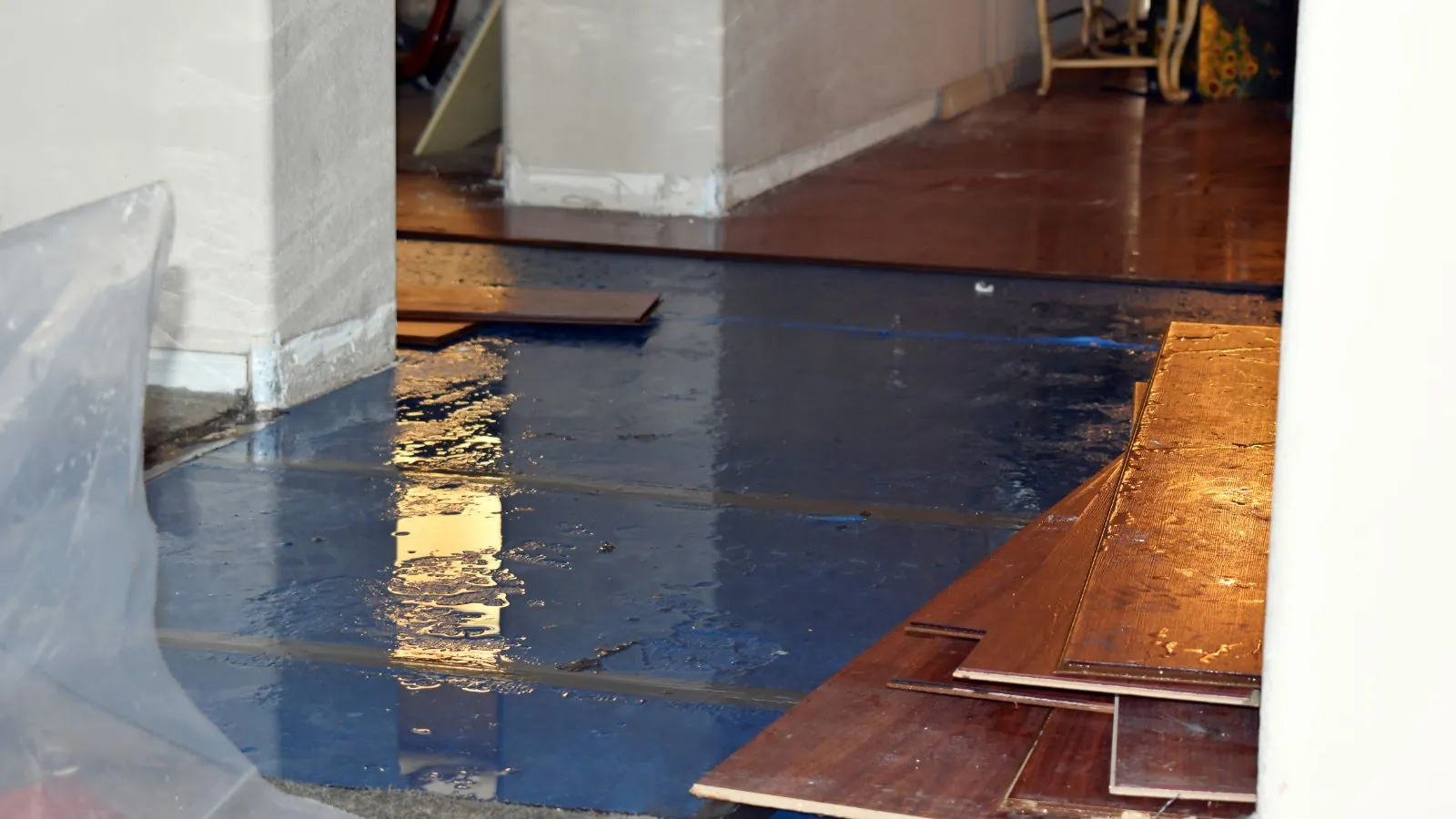
A leaking appliance is an emergency when the water is spreading, and the 24/7 line is open now. Unplug the appliance if you can reach the cord safely, close the shut-off valve behind it, and mop up what you can while the crew is on the way.
Appliance leak water damage in Westland, MI starts at a hose, a drain line or a valve behind a dishwasher, washing machine, refrigerator or ice maker. The water usually runs under the appliance and into the subfloor before the surface looks wet.
Appliance leak emergency: stop the water first
Close the supply valve to the appliance, usually a small valve on the wall or under the sink. If water is coming from the drain side, stop using the machine and keep the drain hose from running. Do not pull a heavy appliance out of a wet area if you cannot see where the floor is soft.
If water is near the outlet or the breaker panel, stay away and call 911 for the electrical risk. After hours, the dispatcher can talk you through the shut-off and the first steps.
Where appliance leaks hide
Most appliance leaks are slow before they are fast. A hose weeps for weeks, the subfloor stays damp and the first sign is a soft spot, a warped board or a musty smell near the appliance.
| Appliance | Common failure | Where the water goes |
|---|---|---|
| Washing machine | Supply hose or drain hose | Floor, subfloor and the room below |
| Dishwasher | Door gasket or inlet valve | Under cabinets and into kitchen flooring |
| Refrigerator | Ice maker supply line | Behind the unit and under the floor |
| Sink and disposal | Drain trap or supply | Cabinet base and the wall behind it |
What the crew does
- Water is extracted from the floor surface and from the subfloor edge where possible.
- Cabinet kick plates, baseboard and wall bottoms are opened to check for trapped water.
- Drying equipment runs for several days with daily readings.
- Materials that cannot dry, such as swollen particleboard, are listed for replacement.
Kitchens and laundry rooms
Kitchens are the most common site for appliance leaks, and they have the most expensive things to damage. The kitchen water damage page covers cabinets and countertops in detail. Laundry rooms near finished space can send water into a carpeted room or a hardwood floor nearby.
Why the slow leak is the expensive leak
A sudden hose burst gets noticed within minutes. A slow leak can run for weeks and soak the subfloor, and then the repair is larger. When a stain keeps coming back after you wipe it, treat it as a leak and call before the floor starts to cup or the smell starts.
Westland is a city of mostly owner-occupied homes. The Census Bureau puts the owner-occupied rate at 61.3 percent, so many of these repairs are the homeowner's to arrange directly with the insurer and the contractor.
The ANSI/IICRC S500 standard classifies water by how contaminated it is, and a supply hose leak is usually the cleanest class, while a washer drain overflow can be dirtier. Ask any company which class it believes applies and why.
Safety steps while you wait
- Unplug the appliance only if the cord and the floor around it are dry.
- Do not tilt or pull a heavy appliance across a wet floor.
- Keep children and pets out of the kitchen or laundry area.
- Photograph the failed hose or valve before anything is replaced.
Appliance leaking now?
Close the supply valve and call the 24/7 line.
What shapes the cost of appliance leak water damage
- Whether the leak was sudden or had run for weeks.
- The floor material and what is under it.
- How far the water traveled behind cabinets or walls.
- Drying days and equipment.
- The repair or replacement scope.
Many homeowners policies cover a sudden and accidental appliance discharge and exclude gradual leaks or wear. Ask your insurer which one your loss falls under, and keep the failed hose or part.
Want your real number? Call (833) 521-1033 and the scope and price are explained before work starts.
Common questions
Do you handle appliance leak water damage emergencies at night or on weekends in Westland?
Yes. A washer hose that lets go on a Sunday evening is a normal call here. Tell the dispatcher which appliance it is and whether its valve is closed.
Should I keep the broken part?
Yes. Keep the failed hose, valve or fitting. It shows how the water escaped, and an insurer may ask to see it.
Is a small appliance leak worth a call?
If water got under the floor or behind a cabinet, yes. A moisture meter reading shows whether it is only on the surface.
Can I run a fan and dry it myself?
For a small spill on a hard floor, yes. Water in a subfloor or wall needs measured drying, because a surface that feels dry can still hold moisture.