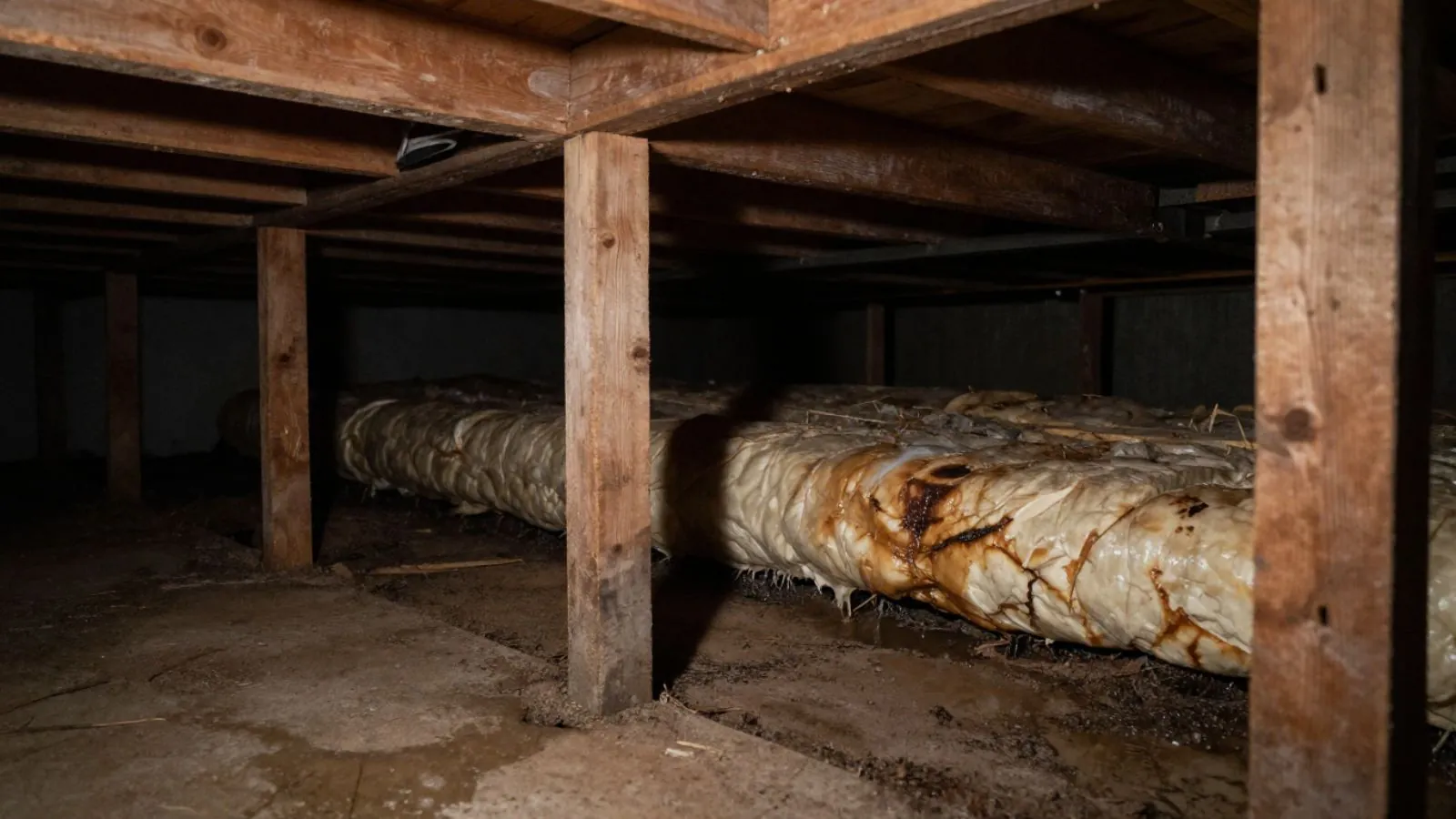
Water under your house deserves a quick call, and the line is open 24/7. Do not enter a crawl space with standing water if the electrical wiring may be wet, and call the line before you go in.
Crawl space water damage in Westland, MI starts below the floor, so it shows up as cold floors, a musty smell or a spongy spot in the flooring above. The space is hard to inspect, and water there can sit for weeks before it shows upstairs.
How crawl spaces get wet
Heavy rain can raise the water table and push water through a vent or foundation wall. A plumbing line can leak into the soil. Gutters that drain next to the foundation can send water toward the wall, and a sump that is missing or has failed lets water stay. Detroit-area precipitation averages about 34 inches a year, with May the wettest month at 3.72 inches, according to National Weather Service normals.
- Water through foundation vents or cracks after heavy rain.
- A leaking supply or drain line under the floor.
- Gutter and downspout water that lands next to the wall.
- High humidity that condenses on cold pipes and ducts.
What the crew does
The crew removes standing water with pumps, then checks the joists, subfloor underside and insulation with moisture meters. Wet insulation is removed because it holds water against the wood. Dehumidifiers and air movers dry the space while readings are logged each day.
| Finding | Likely cause | Response |
|---|---|---|
| Standing water | Rain, groundwater or a leak | Pumping, source check and drying |
| Damp, sagging insulation | Condensation or a leak above | Remove and dry the framing |
| Wet vapor barrier | Poor drainage | Dry, repair or replace by scope |
| Musty smell upstairs | Moisture below the floor | Moisture mapping and drying |
Floors above a wet crawl space
Moisture from below makes hardwood cup and carpet pad hold dampness. If you notice a floor that feels soft or boards that lift, see hardwood floor water damage repair. For the equipment that dries the space itself, the structural drying page explains the process.
What a homeowner can do
Keep gutters and downspouts clear and pointed away from the foundation. Check that the ground slopes away from the house. These are small steps that reduce how much water gets close to the crawl space, though they do not replace drying a space that is already wet.
After heavy storms, storm water damage cleanup explains what to document. A crawl space with sewage is a separate case and belongs under sewage backup cleanup.
Safety in tight spaces
Crawl spaces are cramped, dark and often have exposed wiring, ductwork and sharp edges. A person should not enter one that has standing water near electrical parts. The crew uses protective gear and a light, checks for hazards first and works in short sections so the space can be dried without anyone getting stuck.
Water under the house?
Stay clear of wet wiring and call the line.
What shapes the cost of crawl space water damage
- The size of the crawl space and the depth of water.
- How much insulation was wet.
- Whether a plumbing leak or groundwater is the source.
- Drying days and equipment.
- Any repair to the vapor barrier or the floor above.
Groundwater and flood water are often excluded from a standard homeowners policy, while a sudden plumbing leak may be covered. Say you have water damage when you call your insurer and ask what applies.
Want your real number? Call (833) 521-1033 and the scope and price are explained before work starts.
Common questions
Can I go in the crawl space myself?
If there is standing water near wiring or you cannot see the floor, stay out and call. Tight spaces and wet electrical equipment are real hazards.
Why does my floor feel cold and soft?
Moisture under a floor can make the subfloor and boards absorb water. A moisture meter reading tells you whether it is a surface issue or a wet crawl space.
Is wet insulation always replaced?
Usually, because it holds water against the wood and takes a long time to dry. The crew checks it with a moisture meter first.