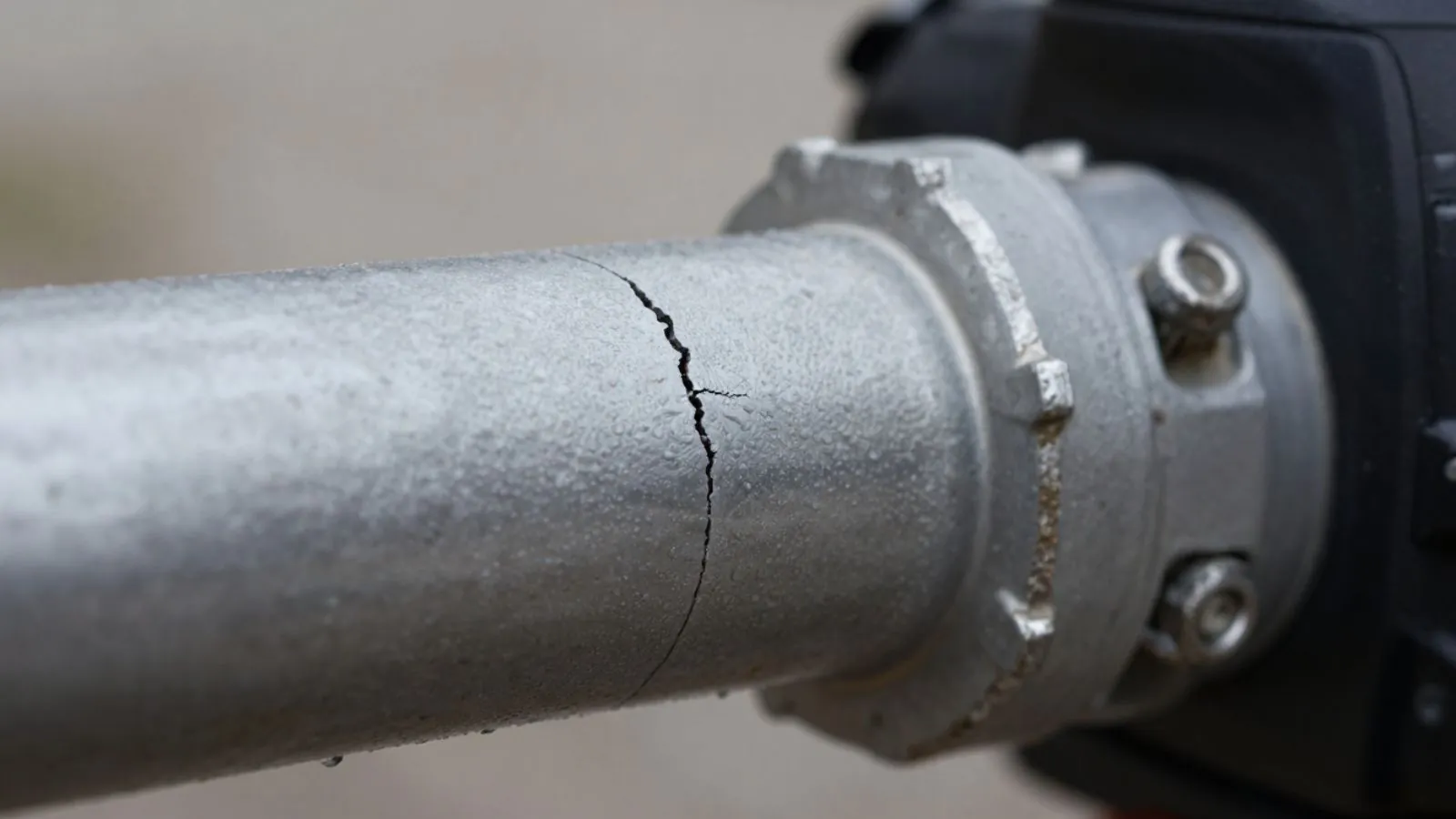
A frozen pipe that has split is an emergency the moment it thaws, and the 24/7 line is open now. If a pipe is frozen but not yet leaking, keep the heat on, open the faucet slightly and call before you try to thaw it with anything that makes heat or sparks.
Frozen pipe water damage in Westland, MI happens when water inside a supply line freezes, expands and splits the pipe wall. The split often does not leak until the ice melts, so the damage starts hours after the cold has passed.
Frozen pipe emergency: when the thaw starts the leak
If a faucet that was dripping stops, or a wall that was cold suddenly feels damp, assume a split and close the main valve. Do not use an open flame, a propane torch or a high-heat tool on a frozen line, because those cause fires and make the split worse.
If water is already running, close the main, call 911 for any electrical risk and then call the 24/7 line. The dispatcher will ask where the pipe is, because an exterior wall, an unheated garage and a crawl space each need a different response.
Why pipes freeze and split
Detroit-area winters average about 45 inches of snow, according to National Weather Service 1991 to 2020 normals, and Michigan homes see repeated freeze and thaw cycles. A pipe on an exterior wall, in an unheated garage or near a cold crawl space can reach freezing temperatures even when the rest of the house is warm.
The split is usually a thin lengthwise crack, and a small crack under pressure can release a lot of water. Because the line is plugged by ice until the thaw, many people only learn about the damage when the pipe warms up, which can be the next afternoon.
Signs to check after a cold snap
- Water pressure that drops or stops at one faucet.
- Frost on the outside of a visible pipe.
- A damp or stained patch on drywall in an exterior wall.
- A sound of running water when everything is off.
- A musty odor near a cold crawl space or garage.
How the crew responds
The crew checks the wall and floor with moisture meters and thermal imaging, removes standing water, and opens wall sections where water is trapped. A licensed plumber repairs the split, and the drying plan is built around that repair.
| Stage | What happens | Why |
|---|---|---|
| Stop | Close the main, drain the line | Limits the volume released |
| Extract | Pumps and extraction units remove water | See water extraction |
| Open | Remove wet drywall and insulation in the wall | Gives air a path into the cavity |
| Dry | Air movers and dehumidifiers with daily readings | See structural drying |
Prevention that does not need a contractor
Keep the heat set above freezing when you travel, open cabinet doors under sinks on exterior walls during a hard freeze, and let a faucet drip on the coldest nights. Insulating pipes in unheated spaces is a job for a plumber or handyman, and this line only handles the water damage after the fact.
If the failed pipe was in a basement or crawl space, the basement page and crawl space page explain what those lower spaces need. The same crew serves Westland, Livonia and the nearby towns on the service area page.
Pipe thawed and leaking?
Close the main valve and call the 24/7 line.
What shapes the cost of frozen pipe water damage
- How long the pipe ran after the thaw before the water was shut off.
- Whether the split was in a wall, a ceiling or an unfinished space.
- The materials that were wet.
- The drying days and equipment required.
- The rebuild scope after drying.
A burst from freezing is often treated as sudden damage, but policies differ on vacant homes and on maintaining heat, so ask your insurer before you assume coverage.
Want your real number? Call (833) 521-1033 and the scope and price are explained before work starts.
Common questions
Do you handle frozen pipe water damage emergencies at night or on weekends in Westland?
Yes, including the cold nights when a split pipe thaws and starts running. Tell the dispatcher where the pipe is, such as an exterior wall, garage or crawl space.
Can I thaw a frozen pipe myself?
Slow, gentle warmth such as opening a faucet and raising the room temperature is the safe approach. Never use an open flame or a torch. If you cannot reach the pipe, call a plumber, and call the restoration line if water has already escaped.
My pipe thawed and nothing leaked. Am I safe?
Check the wall and floor around it for dampness over the next day, because small splits sometimes weep rather than spray. A moisture meter reading is the reliable check.
Does this line replace the pipe?
No. A licensed plumber replaces the split section. The crew handles the water cleanup and drying.