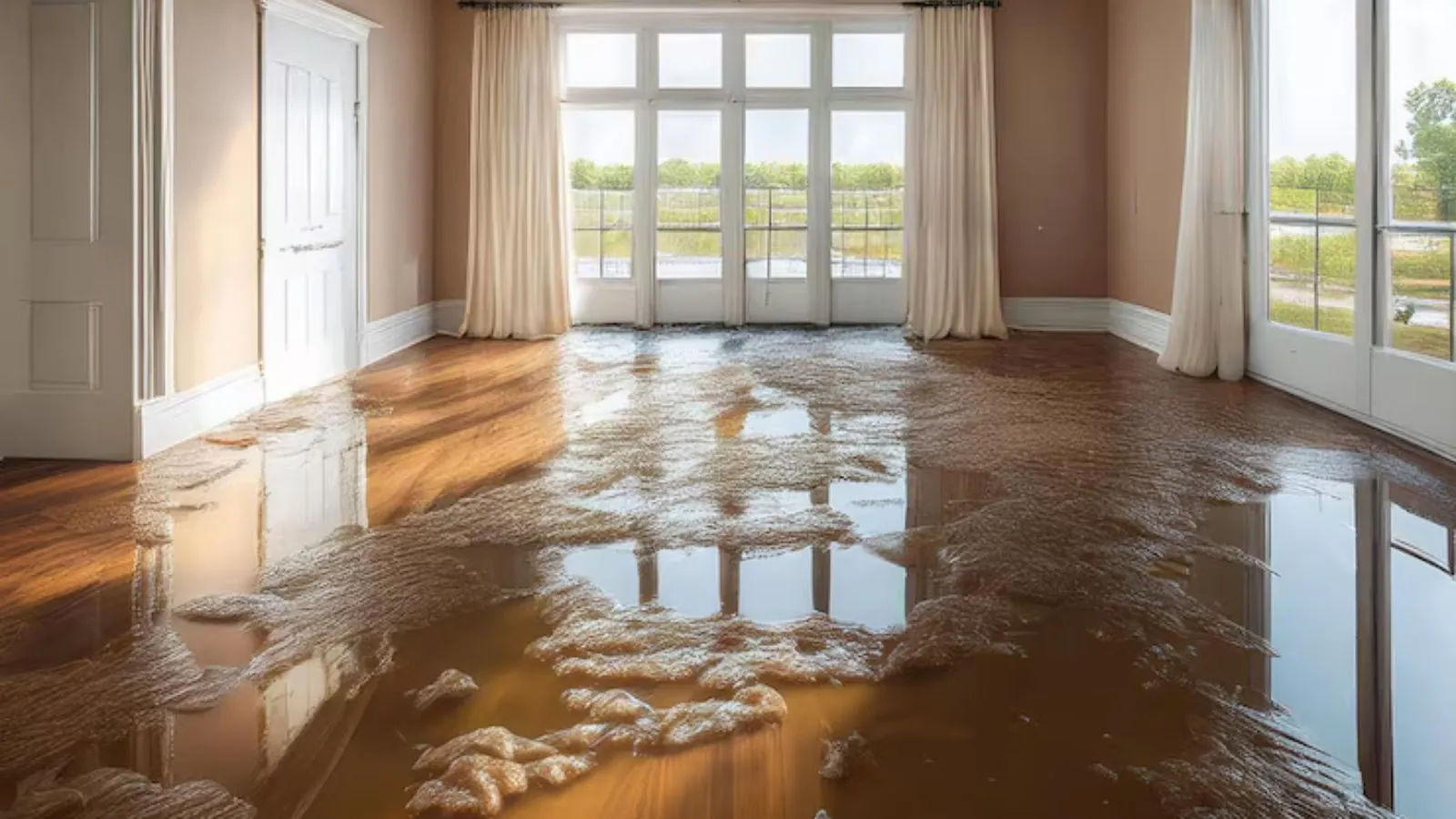
A fresh coat of paint can hide a lot. When you tour a house, you see the surface, and water damage often lives under it. A short, careful walk-through can catch the signs that an inspector will look at more closely.
This guide is a checklist for buyers, general in nature. A licensed home inspector is the right person for a full inspection, and your agent can advise on disclosure and the purchase contract.
Start with your nose
A musty smell in a closed basement or a bathroom is a flag. Be suspicious of strong air fresheners or fresh paint in one room only. Walk through with the windows closed for a minute and notice what the air smells like near the floor.
Ceilings and walls
- Brown or yellow rings on a ceiling, especially below a bathroom or roof valley.
- Bubbling or peeling paint, or a wall that sounds soft when tapped.
- Baseboards pulling away or stained at the bottom.
- Patches that are newer than the rest of the wall.
Floors
Look for cupped or lifted boards, soft spots, buckled laminate and carpet that feels damp. Stand on the floor near sinks, toilets, the dishwasher and the washing machine. A floor that gives or feels cold can point to moisture below. See hardwood floor water damage repair for what cupping means.
| Area | What to look for | Why it matters |
|---|---|---|
| Basement | Water lines on walls, efflorescence, musty smell | Past or recurring water |
| Under sinks | Swollen cabinet base, stains, damp trap | Slow leaks |
| Around the water heater | Rust, stains on the floor | Past leak or failing tank |
| Ceilings | Rings, sags, newer paint | Roof or plumbing leak |
| Exterior | Downspouts, grading, cracks, gutters | Where water enters |
The basement and crawl space
Check for a sump pit and whether the pump runs. Look at the bottom of the walls for staining, white mineral deposits and signs that stored items were moved up. Ask whether the basement has taken on water. The guide on basement water damage cleanup explains what a proper repair involves.
Outside the house
Look at the roof edge, the gutters, the downspouts and whether the ground slopes away from the foundation. Water that drains toward a wall is the usual cause of a wet basement. Look for stains under windows and at the corners of the foundation.
Questions to ask the seller
- Has the house ever had water in the basement, a leak or a plumbing failure?
- Was there an insurance claim, and do you have the repair records?
- Has the sump pump or roof ever been replaced?
- Can I see the moisture readings or the invoices?
Bring in an inspector
A home inspector uses a moisture meter and a thermal camera and can check the places you cannot reach. If the inspector finds damage, a restoration crew can write a scope that gives you a number for negotiation. For wall and ceiling work, see wall and drywall water damage repair.
The same checklist works for homes in Livonia and nearby towns.
Documents to request
Ask the seller or the listing agent for records, and read them for dates. A plumber invoice from three years ago and a restoration scope from the same month tell a clear story. A single receipt with no scope tells you only that something happened.
- Insurance claim history for the property, if the seller will share it.
- Invoices for plumbing, roofing and sump pump work.
- Restoration scopes and moisture readings.
- Any permits pulled for repairs.
After the inspection
If the inspector finds damage, get a written scope for the repair before you negotiate. A scope turns a vague worry into a list of work that someone can price. You can then ask for a repair, a credit or a price change, or decide to walk away.
Westland home facts for buyers
The Census Bureau lists the median value of owner-occupied homes in Westland at $184,600 and the 2020 population at 85,420. At that price level, a repair bill for a wet basement or a roof leak can be a large share of the purchase price, so a careful check is worth the time.
In Norwayne, a National Register district listed in 2013, the Michigan historical marker says the original houses were built without basements and without gutters. A buyer there should look at grading and downspouts rather than a sump pit. See the Norwayne page for the neighborhood.
Water damage right now?
Call the 24/7 line and get the next steps explained.
Common questions
What is the most common sign of hidden water damage?
A brown ring on a ceiling, a musty smell, soft flooring or a swollen cabinet base. Any of these calls for a moisture reading.
Can fresh paint hide water damage?
It can hide a stain, but a moisture meter still reads the wall. Be cautious of new paint in a single room.
Should I ask for repair records?
Yes. Ask for plumber, roofer and sump pump invoices and any restoration scope.
What should a buyer look at in a Norwayne house?
Grading and downspouts, because the original houses were built without basements and gutters according to the Michigan historical marker.